Are LLMs the silver bullet for document automation? Not quite. But they are half of a very powerful solution. The real breakthrough comes when you combine Large Language Models (LLMs) with AI Agents and Intelligent Document Processing (IDP).
The Shift That's Actually Happening (and What's Driving It)
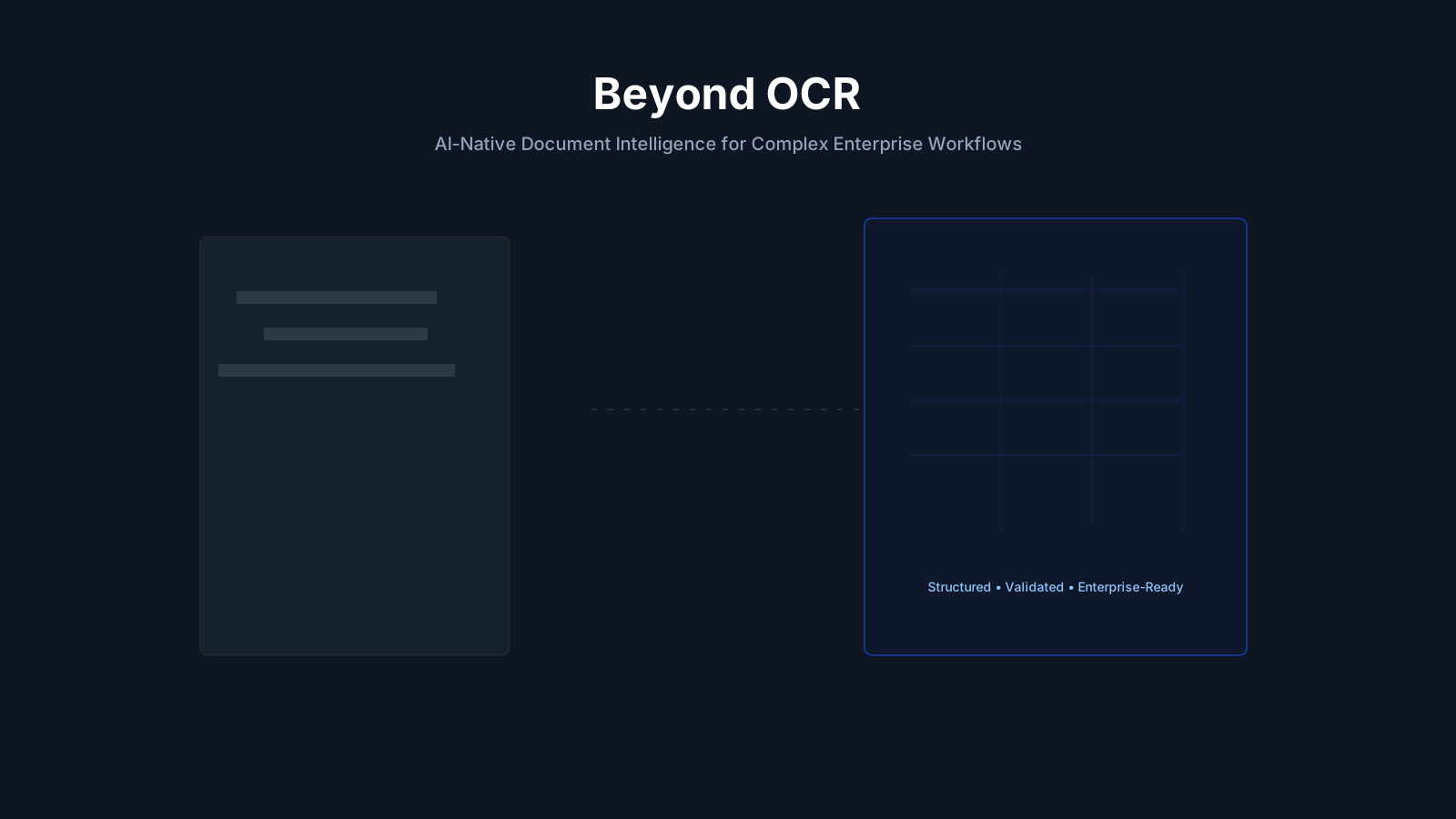
For years, Intelligent Document Processing (IDP) has promised to automate document-heavy workflows. Traditional IDP solutions used OCR and rules-based systems, which often struggled with complex or unstructured documents. This meant constant manual intervention.
The rise of LLMs changes everything. These models bring natural language understanding and reasoning capabilities, which are essential for understanding the context of documents, not just the raw data. However, LLMs alone aren't enough. They need structured, validated data and a way to act on their insights. The convergence of IDP and AI Agents is creating a new paradigm where documents are not just processed, but understood and acted upon intelligently. Think of it this way: IDP extracts the ingredients, the LLM understands the recipe, and the AI Agent cooks the meal.
Why LLMs Alone Can't Run Document Workflows at Enterprise Scale
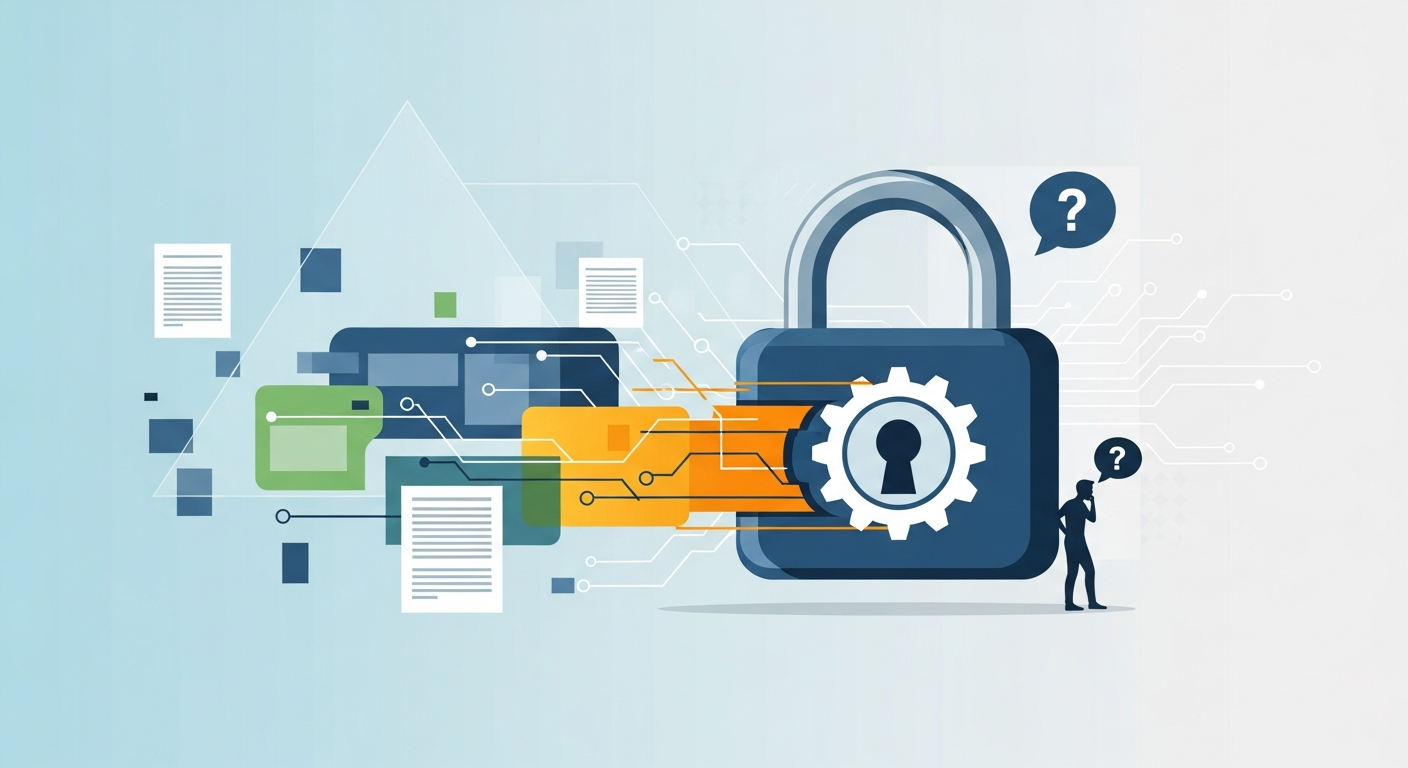
LLMs are incredible at understanding language, but they aren't designed to handle entire document workflows independently. Consider invoice processing. An LLM can identify the invoice amount, vendor, and due date. However, it can't automatically validate that information against a purchase order, flag discrepancies, or update your accounting system.
LLMs also struggle with:
- Data Validation: LLMs can hallucinate, making up information. They need a reliable source of validated data.
- Action and Execution: LLMs primarily generate text. They don't have built-in mechanisms to trigger actions in other systems.
- Scalability and Cost: Running every document through an LLM can be expensive and slow, especially for high-volume processes.
This is why a layered architecture, combining IDP, LLMs, and AI Agents, is essential for enterprise-grade document automation.
The New Architecture — How IDP and AI Agents Actually Work Together
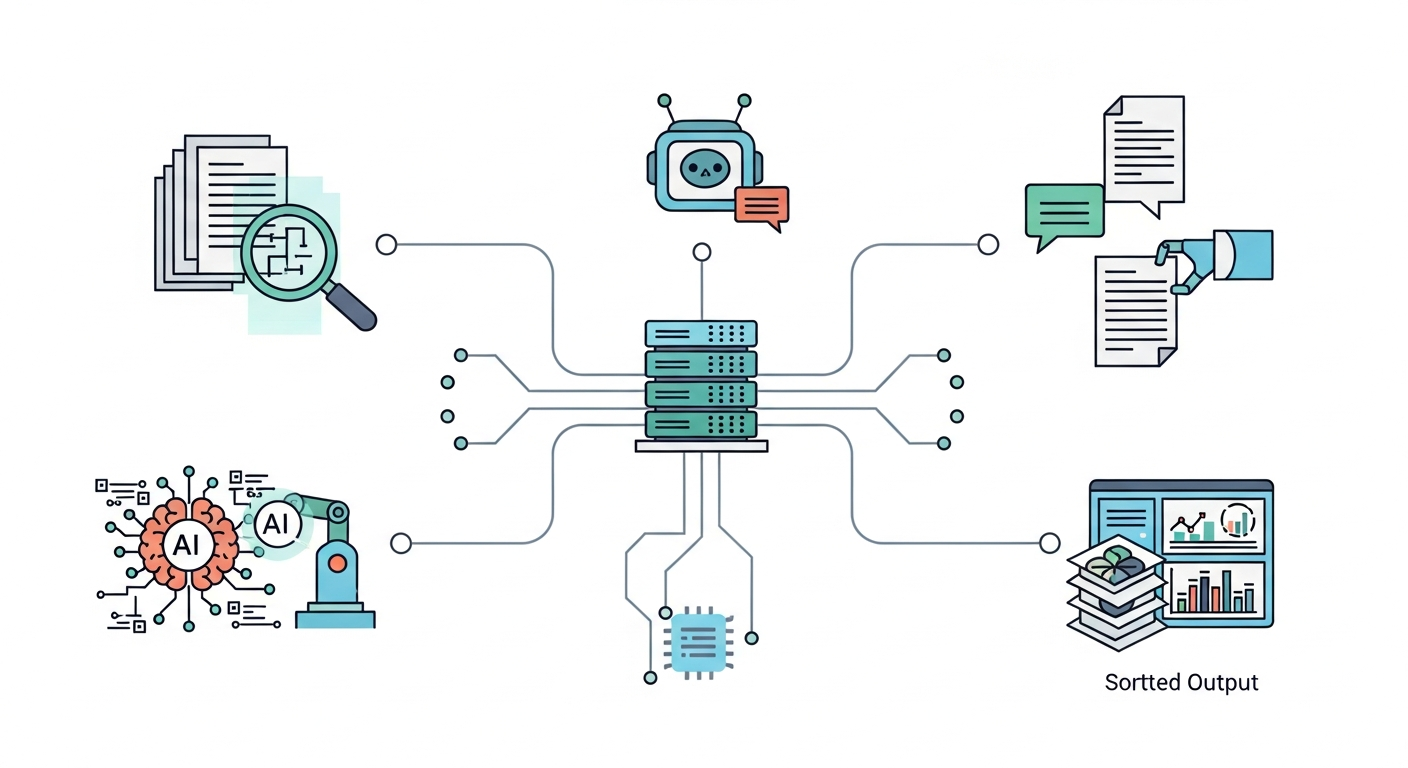
The new architecture for intelligent document processing involves three key layers, each playing a distinct role in automating document workflows.
Layer 1 — Document Intelligence (IDP)
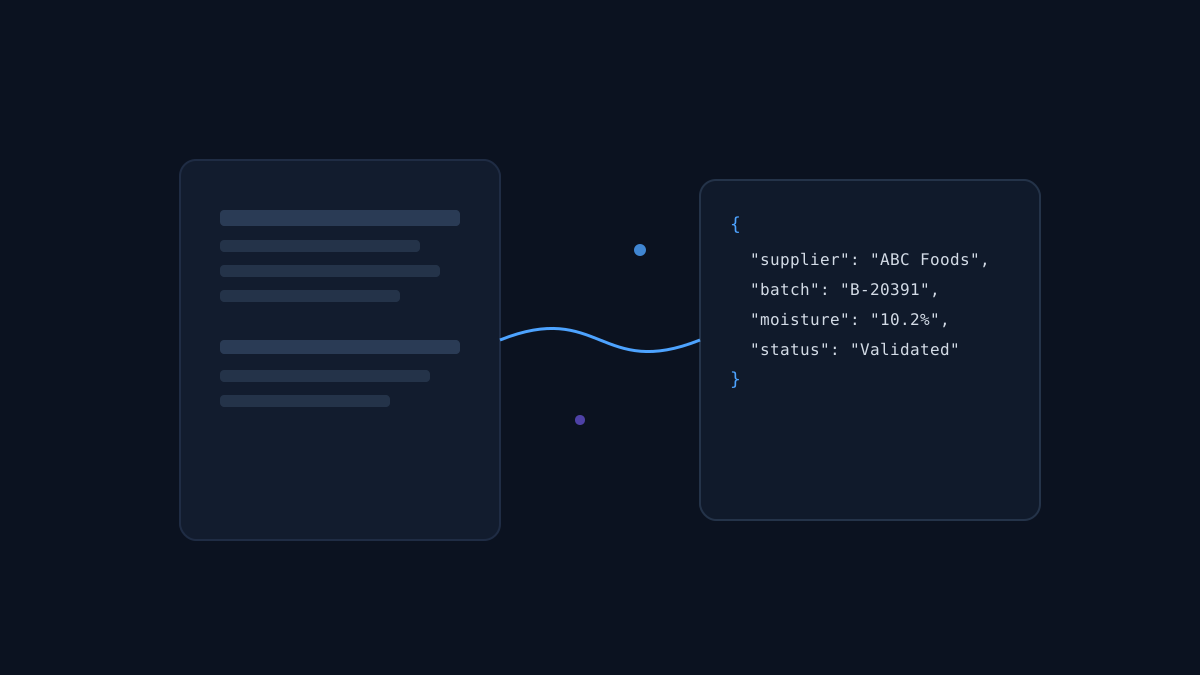
This layer is responsible for extracting structured, validated data from any document type, regardless of its format or complexity. This is where traditional IDP technologies shine, enhanced by AI-powered OCR and machine learning. For example, Ameya Extract excels at accurately extracting data from invoices, purchase orders, bank statements, and other critical documents. It goes beyond simple text recognition to understand the document's layout and context, ensuring high accuracy and reliability. This layer acts as the foundation, providing the clean, structured data that the LLM needs to operate effectively. Think of Ameya Extract as the engine that powers the entire process.
Layer 2 — LLM Reasoning
With structured data in hand, the LLM can now interpret that information in context, make decisions, and handle exceptions. Instead of just extracting data, the LLM can understand its meaning. For example, it can compare the invoice amount to the purchase order amount and identify any discrepancies. It can also use its knowledge to determine the appropriate course of action based on predefined rules or policies. This layer adds a layer of intelligence that traditional IDP systems lack, enabling more sophisticated and automated decision-making.
Layer 3 — AI Agents
This is where the magic happens. AI Agents take action based on the LLM's analysis and decisions. They can push data to ERP systems, respond to vendor queries, flag non-conformances, and route documents for human review, all automatically. For instance, if the LLM identifies a discrepancy between an invoice and a purchase order, the AI Agent can automatically send an email to the responsible party, requesting clarification. This layer completes the automation loop, enabling end-to-end document workflows that require minimal human intervention. With Ameya AI Agents, businesses can finally achieve true lights-out automation for their document processes.
What This Means for Operations Teams Right Now — 3 Practical Changes
- Focus on Data Quality: Invest in IDP solutions that deliver highly accurate and validated data. The better the data going into the LLM, the better the results. Don't skip on validation to save time; garbage in, garbage out still applies.
- Automate Exception Handling: Use LLMs to handle complex or ambiguous cases that traditional IDP systems can't manage.
- Build End-to-End Workflows: Integrate IDP, LLMs, and AI Agents to automate entire document processes, from ingestion to action. Think holistically about the entire process.
Where This Is Already Working — Industries Seeing the Most Impact
Several industries are already seeing significant benefits from the convergence of IDP, LLMs, and AI Agents:
- Finance: Automating invoice processing, reconciliation, and fraud detection. Our Invoice Extractor and Bank Statement Converter are crucial first steps here.
- Healthcare: Streamlining patient onboarding, claims processing, and medical records management.
- Manufacturing: Automating purchase order processing, quality control documentation (using tools like our COA Extractor), and supply chain management.
- Logistics: Automating shipping documentation, customs clearance, and delivery confirmations.
These industries handle massive volumes of documents daily, making them prime candidates for AI-powered automation. Which industry is your company in, and what document bottlenecks are slowing you down?
What to Look for When Evaluating an LLM-Powered IDP Platform
When evaluating an LLM-powered IDP platform, consider these factors:
- Accuracy: Does the platform deliver highly accurate data extraction and validation?
- Flexibility: Can the platform handle a wide range of document types and layouts?
- Integration: Does the platform seamlessly integrate with your existing systems?
- Scalability: Can the platform handle your document volume and processing speed requirements?
- Security: Does the platform meet your security and compliance requirements?
It's important to look for a solution that combines the strengths of IDP, LLMs, and AI Agents, rather than relying solely on one technology. A truly comprehensive platform will offer a modular approach, allowing you to customize the solution to your specific needs. Are you planning to pilot this type of solution or jump straight to a full implementation?
FAQs
How does Ameya use LLMs for document extraction?
Ameya uses LLMs in conjunction with traditional IDP techniques. Our IDP engine extracts the raw data, and then the LLM analyzes that data to understand its context and meaning. This combination allows us to achieve higher accuracy and handle more complex document types than traditional IDP systems alone.
Can Ameya AI Agents integrate with my existing ERP system?
Yes, Ameya AI Agents are designed to integrate seamlessly with a wide range of ERP systems, including SAP, Oracle, and Microsoft Dynamics. We offer pre-built connectors for many popular systems, and we can also develop custom integrations to meet your specific needs.
What kind of accuracy can I expect from Ameya Extract?
Accuracy depends on the document type and complexity, but in general, you can expect accuracy rates of 95% or higher for most document types. We continuously improve our models using machine learning and human-in-the-loop validation to ensure the highest possible accuracy.
Is Ameya's platform secure?
Yes, security is a top priority. Ameya's platform is built on a secure cloud infrastructure and complies with industry standards such as SOC 2 and GDPR. We use encryption, access controls, and regular security audits to protect your data.
What types of documents can Ameya process?
Ameya can process a wide range of document types, including invoices, purchase orders, bank statements, contracts, shipping documents, medical records, and more. We continuously add support for new document types based on customer demand.
What document-heavy processes are you hoping to transform with AI? Book a demo, and let's explore how Ameya can help.